
Franchise businesses in Poland are four times more likely than independent companies to survive their first five years, with 80% of franchises remaining open compared with only 20% of small businesses. By offering access to advanced technology, operational support, and job creation, franchising proves to be a resilient model suited to navigating current market uncertainty.
As global economic tensions rise with new tariffs and supply chain disruptions, small business owners face growing uncertainty. These challenges affect businesses of all sizes, but data shows franchise operations consistently demonstrate greater resilience than independent ventures during market fluctuations.
Recent Polish market research confirms this trend, revealing that franchise businesses are four times more likely than independent companies to survive their first five years. While only one in five independent businesses remains operational after five years, four out of five franchise operations continue to thrive during the same period.
This dramatic survival gap has gained attention as entrepreneurs seek business models that can withstand current and future economic pressures. Experts point to several structural advantages that franchise systems provide, especially during periods of market volatility.
Franchising offers protection against market volatility
Franchise networks provide entrepreneurs with established operational systems and continuous innovation without the high costs typically associated with business development. “Franchises offer not just a proven success model, but also ready access to the company’s comprehensive expertise, including technological innovations and skill development,” explains Kristijonas Bakutis, Head of Business Development at PRO BRO Express, an international franchise network of express tunnel car washes. “This gives companies a competitive edge that helps franchisees adapt to changing market conditions.”
The franchise model also distributes risk across the network, allowing individual operators to benefit from collective strength during challenging periods. When independent businesses face economic pressures alone, franchisees can tap into established supply chains, marketing resources, and technological infrastructure that would be prohibitively expensive for single operators.
Technology access creates a competitive advantage
One of the clearest advantages franchise systems offer local entrepreneurs is the ability to quickly implement the latest technologies. Many small businesses struggle to keep pace with technological advancements due to limited capital, expertise, and time constraints. Franchise networks solve this problem by making cutting-edge technology accessible to all members.
“Franchisors continually refine their products, services, and operational methods through dedicated research and development. This allows franchisees to access technological advancements without bearing the hefty R&D costs,” Kristijonas elaborates. “By joining a franchise network, entrepreneurs can compete with national players while boosting the local economy.”
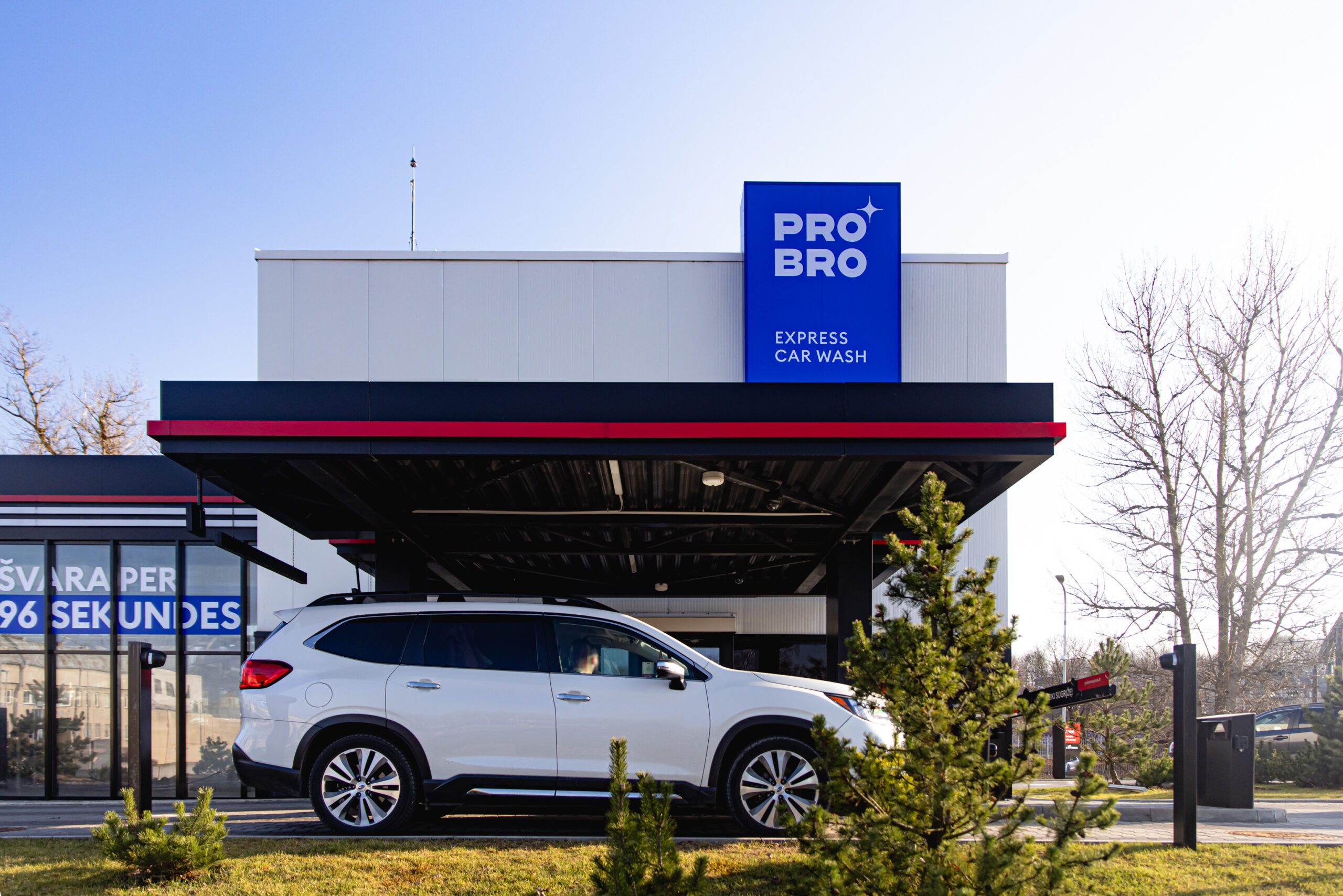
The car wash industry is a great example of this advantage. Traditional car washes typically require 5-10 minutes per vehicle, while modern express tunnels complete the process in just 96 seconds. This efficiency, combined with technologies like mobile apps and automated systems, creates operational advantages that independent operators would struggle to achieve on their own.
Local economic impact extends beyond franchise operations
Beyond individual business success, franchise networks contribute substantially to local economic development. Each location creates employment opportunities and generates secondary economic benefits for surrounding businesses.
In the Baltics, the PRO BRO franchise network has established 25 car wash locations, each creating up to eight positions, including cashiers, maintenance staff, and managers. This employment impact multiplies as the network grows.
“Franchising a car wash business brings additional revenue to local businesses such as restaurants, cafés, and retail stores,” Kristijonas Bakutis notes. “It creates a multiplier effect by generating steady customer flow, increasing dwell time, and translating visits into additional spending across the local commercial environment.”
As PRO BRO plans to expand into the Polish market, the company sees an opportunity to replicate this economic impact model. The company’s growth strategy focuses on identifying master franchisees who can develop regional networks, create business opportunities, and deliver advanced vehicle cleaning technology to new markets.
-
 2026/06/2979% of Polish Drivers Willing to Pay for Faster Car Washes: New Study Reveals Demand Surge
 -
 2026/06/15Car Wash Market Set to Grow from €31 to €47 Billion: Express Tunnels Reshape Investment Landscape
 -
 2026/06/15Franchising Shows Four Times Greater Resilience Than Independent Businesses During Economic Uncertainty
 -
 2026/06/15PRO BRO Eyes Poland with Franchise Insight from Former McDonald’s Executive João Noronha Lopes